

From Lab to Leading Edge:
Radius TBI's Groundbreaking Research on Mild Cognitive Impairment
One of North America’s largest outpatient centers and most comprehensive medical care for concussion/TBI in Ft. Lauderdale, Tampa and Orlando, Florida
Staying on the Cutting Edge
Radius TBI’s Breakthrough in Mild Cognitive Impairment Research
In the ever-evolving landscape of neuroscience research, Radius TBI stands at the forefront, committed to pushing boundaries and unlocking new insights into traumatic brain injuries. Completing our recent research project marks a significant milestone in our pursuit of knowledge, particularly in Mild Cognitive Impairment (MCI). The findings not only contribute to our understanding of MCI but also hold the potential to revolutionize future diagnostic methods and interventions.
Introduction to Mild Cognitive Impairment (MCI)
MCI poses a complex challenge for diagnosis, as its symptoms overlap with various neurological disorders,
and the existing diagnostic tools are time-consuming and resource-intensive. At Radius TBI, our researchers have delved into the intricacies of MCI, recognizing the need for a more streamlined and objective approach to diagnosis.
Our team has focused on Oculomotor, Vestibular, and Reaction Time (OVRT) assessments as an essential tool for objectively evaluating MCI. This approach provides a non-invasive, sensitive, and cost-effective option for screening and monitoring disease progression, supplementing traditional diagnostic methods.
Target Population and Methodology
The research specifically targeted adults, both male and female, aged 55-90, diagnosed with amnestic Mild Cognitive Impairment (aMCI)
By including a diverse range of participants, regardless of race, ethnicity, creed, or socioeconomic status, we aimed to ensure the applicability and relevance of our findings to a broad population.
Our methodology involved a combination of OVRT assessments, clinical evaluations of memory loss, and other cognitive decline symptoms. The objective was to identify biomarkers associated with MCI and explore the potential of an early diagnostic tool.
Key Findings and Significance
The correlations discovered between Montreal Cognitive Assessment (MoCA) scores and OVRT-C variables are groundbreaking.
Variables such as Visual Paired Comparison, Self-Paced Saccade, Light Reflex, and Smooth Pursuit (horizontal and vertical) demonstrated strong correlations, showcasing their potential as discriminative factors between normal cognitive function and mild cognitive impairment.
Notably, the use of videonystagmography in identifying OVRT-C deficits in aMCI patients has shown promising results. The pilot findings suggest that early identification of neural deficits caused by MCI could enhance our understanding of the damaged neural substrates, aiding in management and potentially preventing long-term consequences.
Implications for Future Research
The success of this research project emphasizes the importance of ongoing studies in neuroscience.
The validated OVRT assessment could serve as a foundation for future research, expanding its application to a broader range of neurological conditions. Moreover, these findings open avenues for exploring interventions and treatments that may alter the course of MCI and related cognitive disorders.
Precision in Brain Health: Radius TBI's OVRT-C Research Shaping the Future of MCI Diagnosis
A Glimpse into Our Research Team
Radius TBI is proud to host a team of dedicated and accomplished scientists at the forefront of brain research. Their expertise in various fields of neuroscience contributes to the multidimensional approach we take in understanding and addressing traumatic brain injuries.
In conclusion, completing our research project marks a significant step forward in the field of MCI, with implications reaching beyond diagnosis into potential treatment and prevention strategies. Radius TBI remains committed to pushing the boundaries of knowledge, staying on top of the latest research, and contributing to the global effort to combat neurological disorders. Our ongoing commitment to excellence in research positions us as a leader in the pursuit of groundbreaking discoveries in the field of traumatic brain injuries and cognitive impairment.
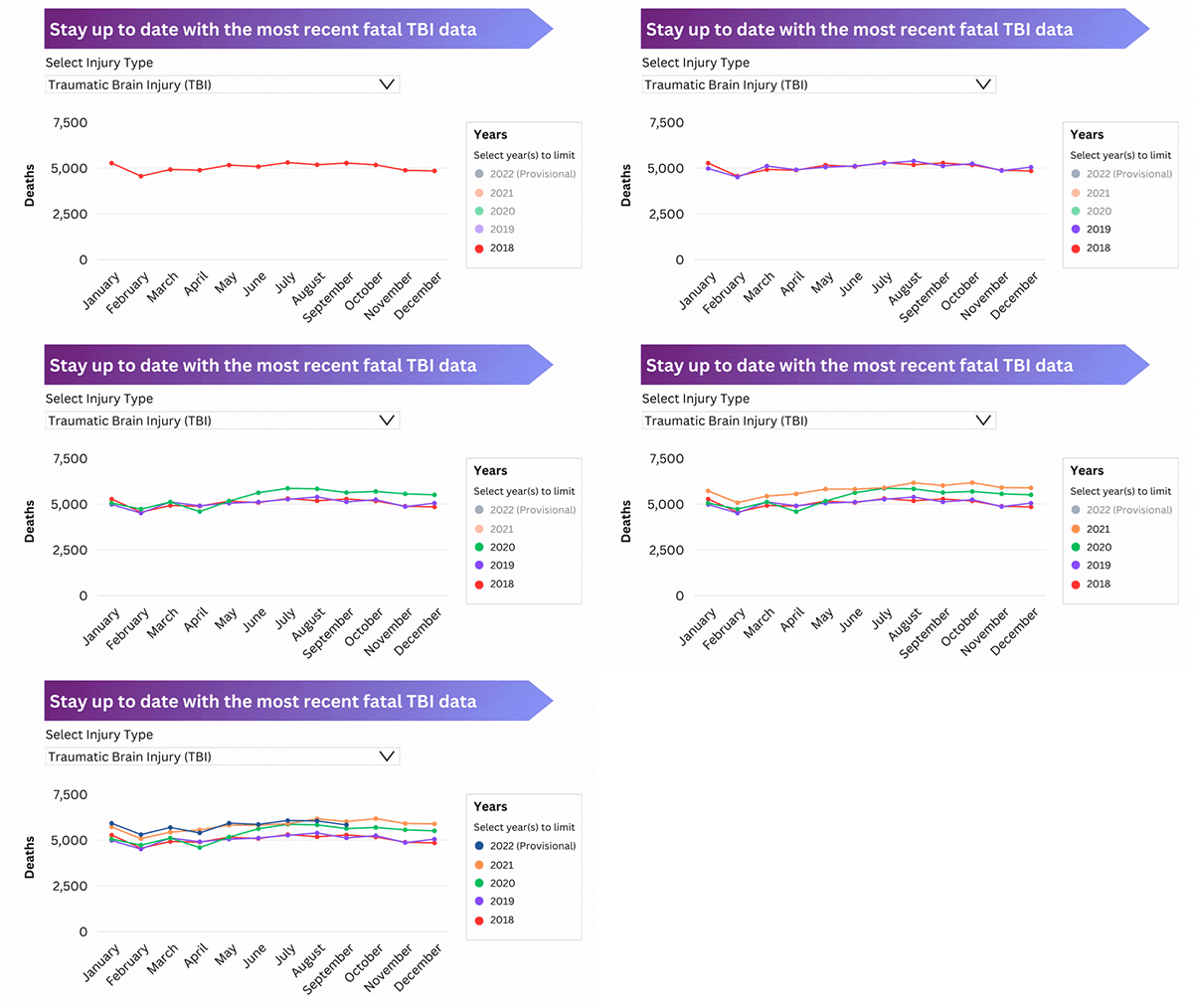
According to CDC: TBI is a major cause of death. This chart above shows the number of TBI-related deaths by month and year Source: https://www.cdc.gov

Why Concussions Don’t Just ‘Heal on Their Own’
Concussions aren’t just bruises — they trigger a metabolic brain crisis invisible on CT and MRI scans. Learn why specialized TBI care matters and when to stop waiting for symptoms to pass on their own.
3 Dangerous Misconceptions About Concussion Recovery That Could Be Harming You
Still struggling after a concussion? Learn the 3 most dangerous myths about concussion recovery — including why “rest and wait” and clear scans don’t mean you’re fine. Radius TBI provides comprehensive TBI diagnosis and treatment.
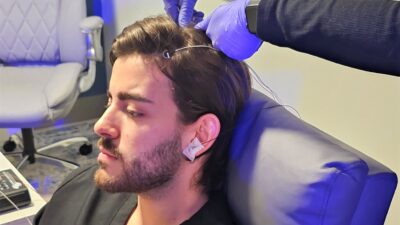
Discover how neurofeedback therapy at Radius TBI retrains your brainwave patterns to improve sleep, reduce anxiety, and support mental health — without medication. Start with a custom brain map.
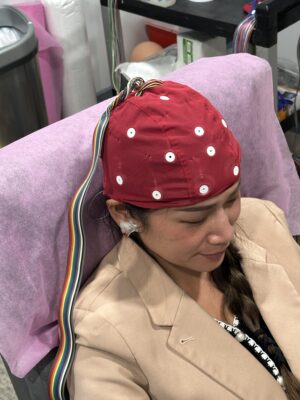
In the world of neuroscience, one of the advanced tools used to understand brain function is the Quantitative Electroencephalogram (QEEG), often referred to as brain mapping. But who interprets these intricate brain maps, and why
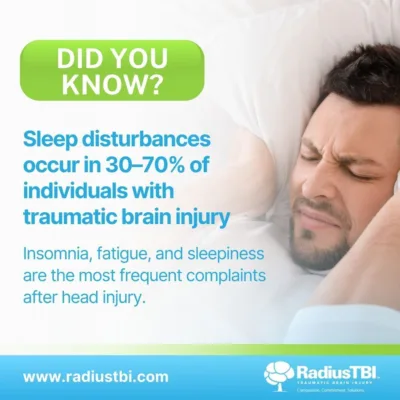
Did you know? Dealing with a traumatic brain injury (TBI) often means navigating a range of complications, one of the most prevalent being sleep disturbances. Surprisingly, 30-70% of individuals with a TBI experience some form
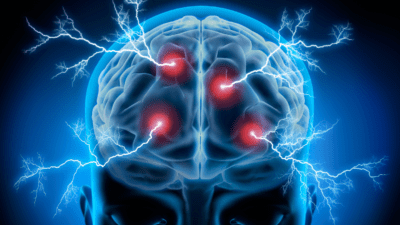
Understanding Routine EEG, QEEG, and Ambulatory EEG Tests
EEG, QEEG, and Ambulatory EEG are distinct forms of electroencephalography, each serving unique purposes in the diagnosis and monitoring of neurological conditions.