

3 Dangerous Misconceptions About Concussion Recovery That Could Be Harming You
Integrative Care for Concussion / Head Injury Sufferers
in Ft. Lauderdale and Boyton Beach, Florida
Introduction: What You’ve Been Told About Concussions May Be Wrong
A concussion can happen in an instant—a collision on the field, a car accident, a fall at home—but its effects can linger far longer than most people are led to believe. Despite being one of the most common forms of traumatic brain injury (TBI), concussions remain widely misunderstood, even among some general medical practitioners.
At Radius TBI, we work with patients every day who have been dismissed, misdiagnosed, or undertreated after a brain injury. Time and again, we see how dangerous misconceptions about concussion recovery can delay healing, worsen outcomes, and leave patients feeling isolated and invalidated.
In this post, we’re setting the record straight on three of the most common—and most harmful—myths about concussion recovery. If you or someone you love has experienced a head injury, this information could make a significant difference in your path to healing.
Misconception #1: "Just Rest for Two Weeks and You’ll Be Fine"
This is perhaps the most pervasive myth in concussion management, and it has the potential to cause real harm. For many years, the standard advice given to concussion patients was simple: go home, rest in a dark room, avoid screens, and wait it out. The assumption was that the brain, like a bruised muscle, would heal on its own with enough time and inactivity.
The reality is far more nuanced—and far more urgent.
Passive rest alone is not a treatment plan. While short-term rest (typically 24 to 48 hours) is recommended immediately following a concussion to allow the brain’s initial metabolic response to settle, prolonged inactivity can actually impede recovery. Research has increasingly shown that gradual, guided return-to-activity protocols—including specific types of physical and cognitive exercise—support neurological healing more effectively than extended bed rest.
Moreover, a concussion that goes untreated can evolve into post-concussion syndrome (PCS), a condition in which symptoms persist for weeks, months, or even years beyond the initial injury. Symptoms of PCS can include persistent headaches, cognitive difficulties, fatigue, mood changes, sleep disruption, and sensitivity to light or sound.
The bottom line: if you were told to rest and given no further treatment plan, you deserve better. An evaluation by specialists trained in traumatic brain injury can help identify what is happening in your brain and create an active, structured path toward recovery.
Misconception #2: "Your Scans Are Clear, So Nothing Is Wrong"
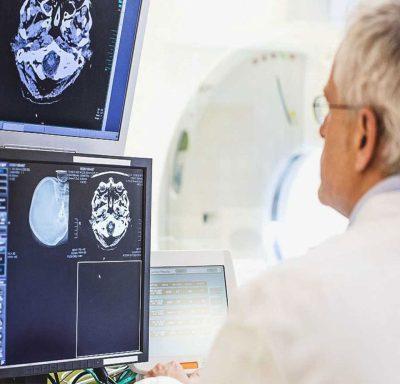
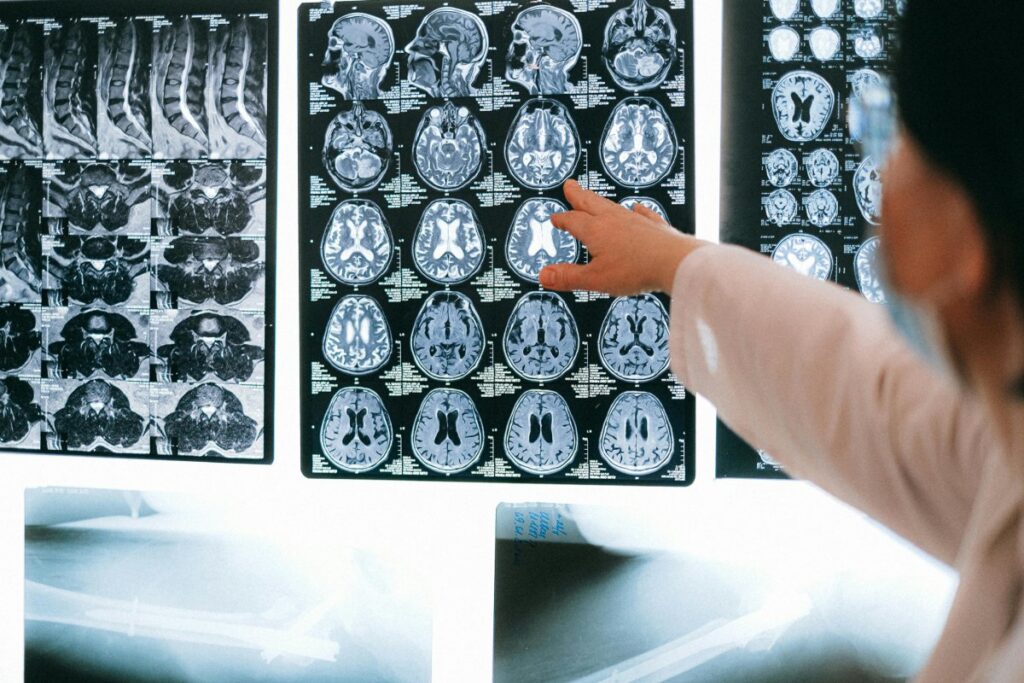
One of the most frustrating experiences for concussion patients is being told by a medical provider that their CT scan or MRI looks normal—and therefore, there is nothing wrong. For patients who are still experiencing very real, very debilitating symptoms, this response can feel dismissive and confusing.
Here is the critical truth: standard imaging misses most brain injury damage.
CT scans are effective at identifying structural abnormalities such as bleeding, fractures, or swelling—conditions that require immediate emergency intervention. They are not designed to detect the type of cellular-level damage that occurs in a concussion. Similarly, conventional MRI scans, while more detailed than CT, are typically not sensitive enough to reveal the microscopic changes in white matter pathways, metabolic disruption, or neuroinflammation that characterize concussive injury.
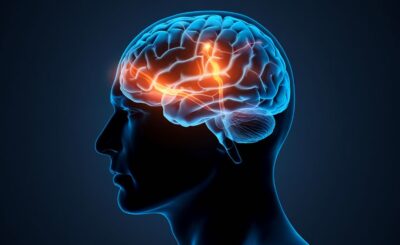
Concussions are fundamentally metabolic injuries. When the brain experiences a concussive force, neurons are disrupted and undergo a complex cascade of chemical and electrical dysfunction. This metabolic crisis is not visible on standard imaging—but it is very much present, and it is directly responsible for the symptoms that patients experience.
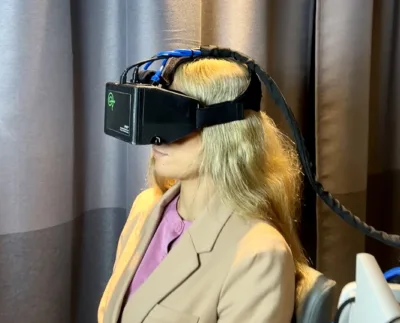
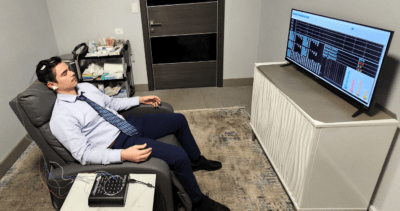
Advanced diagnostic tools, including specialized neurological assessments, quantitative EEG, and other functional evaluations, can provide a more complete picture of how the brain is functioning following an injury. At Radius TBI, our diagnostic approach goes far beyond standard imaging to ensure that nothing is missed.
If you have been told your scans are clear and your symptoms have been dismissed as a result, please know this: a clean scan does not mean a healthy brain. Your symptoms are real, and they deserve investigation.
Misconception #3: "Mood Changes and Anxiety After a Concussion Are Just Stress—Not a Real Brain Injury Symptom"
Perhaps the most insidious misconception in concussion care is the dismissal of psychological and emotional symptoms as unrelated to the physical injury. Patients who report anxiety, depression, irritability, emotional dysregulation, or heightened stress responses after a concussion are often told that these symptoms are simply a psychological reaction to the stress of the injury or recovery process—not a direct neurological consequence.
This is incorrect, and it can be genuinely harmful to patient wellbeing.
Brain injury can be a direct cause of mood and nervous system dysregulation. The regions of the brain responsible for emotional regulation, including the prefrontal cortex, amygdala, and limbic system, are highly vulnerable to concussive injury. When these areas experience disruption, patients can develop very real changes in mood, emotional reactivity, anxiety, and stress response—not as a psychological side effect, but as a direct neurological consequence of the injury.
Furthermore, concussions can disrupt the autonomic nervous system (ANS), which governs the body’s involuntary functions including heart rate, breathing, and the stress response. ANS dysregulation following TBI can manifest as chronic anxiety, difficulty with emotional regulation, sleep disturbances, and an exaggerated stress response—all symptoms that may be incorrectly attributed to pre-existing mental health conditions or life circumstances.
Dismissing these symptoms does more than delay appropriate treatment. It can cause patients to internalize a false narrative about their own mental health, leading to unnecessary suffering and, in some cases, worsening outcomes.
At Radius TBI, we treat the whole patient—not just the physical symptoms. Emotional and psychological symptoms after a brain injury are neurological in nature and deserve the same level of serious, evidence-based attention as any other aspect of TBI recovery.
Why Accurate Diagnosis Matters: The Cost of Getting It Wrong
The consequences of mismanaged concussion care are not trivial. Research consistently shows that patients who receive early, appropriate intervention after a concussion have significantly better long-term outcomes than those who are undertreated or mistreated.
Delayed or inadequate care can result in:
- Prolonged or worsening symptoms that become increasingly difficult to treat
- Development of post-concussion syndrome
- Long-term cognitive impairment
- Chronic mood and anxiety disorders
- Disrupted sleep patterns that compound neurological recovery
- Reduced quality of life, affecting work, relationships, and daily function
You deserve answers. You deserve a provider who takes your symptoms seriously, uses comprehensive diagnostic tools, and designs a treatment plan that addresses every dimension of your injury.
Comprehensive TBI Care at Radius TBI
At Radius TBI, we specialize in the evaluation and treatment of concussions and traumatic brain injuries at every level of severity. We understand that no two brain injuries are alike, and that effective care requires an individualized, multidisciplinary approach.
Our team is committed to providing patients with thorough assessments that go beyond standard imaging, honest and clear communication about their diagnosis, and personalized treatment plans that address the full spectrum of TBI symptoms—including the neurological basis of mood and emotional dysregulation.
Whether your injury is recent or you have been living with unresolved symptoms for months or years, it is not too late to seek specialized support. Recovery is possible, and it starts with an accurate diagnosis.
You deserve answers, not dismissal. If you have experienced a concussion or traumatic brain injury and are still struggling with symptoms, contact Radius TBI today to book a personalized, comprehensive consultation. Our team is here to help you understand what is happening in your brain—and create a path forward.
DID YOU KNOW?
TBI is a major cause of death and life-long disability in the United States. (including all levels of severity)
- An estimated 1.5 million Americans sustain a TBI (Sosin, Sniezek and Thurman 1996);
- 50,000 die from these injuries; and 80,000 to 90,000 experience onset of long-term disability (CDC 1999).
- An estimated 5.3 million Americans live with a permanent TBI-related disability today (CDC 1999).
According to the report to Congress on mild traumatic brain injury in the United States. Centers for Disease Control and Prevention; 2003. https://www.cdc.gov/traumaticbraininjury
Blogs

Identifying Personal Injury Risks and Traumatic Brain Injury at Radius TBI
Accidents can cause life-altering consequences, including traumatic brain injury (TBI). At Radius TBI, with locations in Ft. Lauderdale and Boynton Beach, Florida, we prioritize early detection and comprehensive care for those who may have suffered a TBI. Protect your brain

Why Concussions Don’t Just ‘Heal on Their Own’
Concussions aren’t just bruises — they trigger a metabolic brain crisis invisible on CT and MRI scans. Learn why specialized TBI care matters and when to stop waiting for symptoms to pass on their own.

Head/Brain Concussions & Injured Workers in the Workplace
According to a 2020 National Institute of Health study, 1.4 to 3.8 million Americans suffer concussions yearly. That is a conservative estimate due to the amount of assumed untreated concussions.
Precise Diagnostics, Proactive Care: Nerve Conduction Velocity NCV Testing Solutions in Florida
The Nerve Conduction Velocity (NCV) test is a diagnostic procedure designed to assess the speed at which electrical impulses travel along nerves. This test is an integral component of neurophysiological studies, providing crucial insights into the functioning of the peripheral

Meet our best Psychologists in Broward County, FL Location
This blog will highlight a group of exceptional psychologists – Dr. Ann Marie Paolino, Dr. Beatriz Amador, and Dr. Esther L. Misdraji – who specialize in helping TBI patients recover their lives. These dedicated professionals know the significance of psychological

Finding Best Neurologist in Broward County? Meet Dr. Leonel Perez-Limonte
Have you been in an accident and suspect you might have a concussion? Don’t wait, get checked with the top neurologist in Broward County, Florida. Call Radius TBI 954-900-5072.

What is the most effective ADHD treatment program?
At Radius TBI, we firmly believe in the power of an integrated approach to ADHD treatment. Our brain doctors combine neurofeedback therapy, CBT, and brain mapping to provide comprehensive care that addresses the multifaceted nature of ADHD. By combining these

New Revolutionizing Mild Cognitive Impairment Research
Our groundbreaking study on Mild Cognitive Impairment (MCI) is reshaping the landscape of neurological research. Dive into the complexities of the brain as we unveil the potential of the Oculomotor, Vestibular, and Reaction Time (OVRT) assessment in providing objective insights

Immediate Care for Concussions: Discover How Radius TBI Providers Can Help
The aftermath of an accident can be overwhelming, and the urgency to address injuries might lead individuals to prioritize visible wounds over invisible ones. However, the dangers of untreated concussions cannot be underestimated. Seeking immediate medical attention, even if no

Understanding the Causes and Integrated Medical Care for Bump on the Back of the Head
Discovering a bump on the back of the head can be concerning, especially for individuals who have previously experienced head injuries. At Radius TBI in Ft. Lauderdale and Boynton Beach, Florida, patients who have suffered head injuries can benefit from